BIM Adoption Way Past 101
- By Tarek Ghazzaoui, Eng. (Senior BIM Manager)
- on

BIM Adoption Way Past 101
- By Tarek Ghazzaoui, Eng. (Senior BIM Manager)
- on
Building Information Modeling (BIM) adoption in the AECO industry has evolved far beyond basic 3D modeling, shifting toward advanced, data-driven workflows that enhance collaboration, coordination, and lifecycle management. While early adoption focused on introducing tools like Revit and BIM 360, today firms are leveraging BIM for field integration, 4D/5D scheduling and cost modeling, modularization, digital twins, computational design, and strategic governance.
Table of contents
- Click on an item below to jump to a specific section of the article
Disclaimer
The views and opinions expressed on this website are solely those of their original authors and content creators, and do not necessarily reflect the views, positions, or policies of any company, organization, or other entity the author or content creator may represent or may be associated with. The views and opinions are shared in good faith and are not intended to cause harm, offense, or distress to any individual or group.
The content of the present blog article (including text, images, video, audio) may have been created with the support of artificial intelligence (AI) tools. All content was reviewed by the authors and edited for accuracy.
What is BIM adoption
BIM adoption refers to the integrated process through which companies and entities in an industry use Building Information Modeling (BIM) to complete projects. It’s software and provider-agnostic, meaning that it doesn’t depend on a specific software or set of tools. In simple terms, it’s how companies and entities leverage the use of technology with their staff, tools, standards and processes to design, build and operate their construction projects (specific to AECO, but also the case for other industries such as manufacturing, aerospace, etc.)

Why adopt BIM
There are numerous advantages to adopting BIM in the construction industry, but in summary, here are some major advantages:
- BETTER COLLABORATION – BIM promotes the collaboration of stakeholders on projects in real-time in some cases using cloud services, synchronized tools, and communication tools.
- IMPROVED COORDINATION – BIM promotes the closer coordination between coordination on projects in real-time in some cases using external model linking, 3D models viewing and walkthrough, clash detection, and interference verification.
- COST AND TIME SAVINGS – BIM promotes greater cost and time savings over some time period through automation, scripting, generative design, parametric design, and other similar disciplines.
- IMPROVED DESIGN AND BUILD QUALITY – BIM promotes the improvement of design and build quality on projects through the use the tools, standards and processes that help minimize errors, provide better documentation, and optimizing design and construction.
- LIFECYCLE ASSET MANAGEMENT – BIM promotes the management of assets through the design, construction and operation phases of projects. This allows the downstream use of data for different purposes, which benefits all stakeholders during the useful life of buildings.
BIM adoption 101: Back in the day
Over a decade ago in Quebec, AECO firms frequently engaged us as BIM consultants to introduce them to the fundamentals of BIM, providing training, technical support, and project coaching. At that time, industry maturity was low, and expertise in BIM was scarce. Our work often involved guiding firms from the ground up, introducing tools such as Revit, BIM 360, and other digital solutions, and helping teams understand the potential benefits of model-based workflows.
I recall regularly accompanying a sales manager to client meetings over a decade ago, where our discussions would focus on the basics of BIM, its potential capabilities and advantages. Over time, attending presentations that remained at this introductory level became increasingly boring for me, as the industry had already moved past basic BIM adoption. Nowadays, whenever I encounter basic BIM adoption sessions or discussions, all I could think about is DJ Khaled’s catchphrase “Another One!”.

BIM adoption 101: Current industry needs
Based on industry trends, my experience and my observations, AECO firms are increasingly interested in higher-level BIM adoption, such as organizational workflows, optimized project delivery strategies, advanced use of technology and automation. Gone are the days when BIM consultants are hired to do mundane work or provide basic consulting services, and that is either completed by employees or automated altogether.

The primary focus for BIM adoption nowadays is leveraging better use of data through better documentation, analysis, collaboration, coordination, management and lifecycle value. Rather than treating BIM as a silo-ed initiative in a specific division, firm or specialized field, it is more common to consider it an industry standard on projects nowadays.
What that in mind, let’s dive deeper into the 10 most sought-after BIM adoption topics in today’s market.
The 10 current BIM adoption topics
1. BIM-to-Field Integration (Construction Tech Enablement)
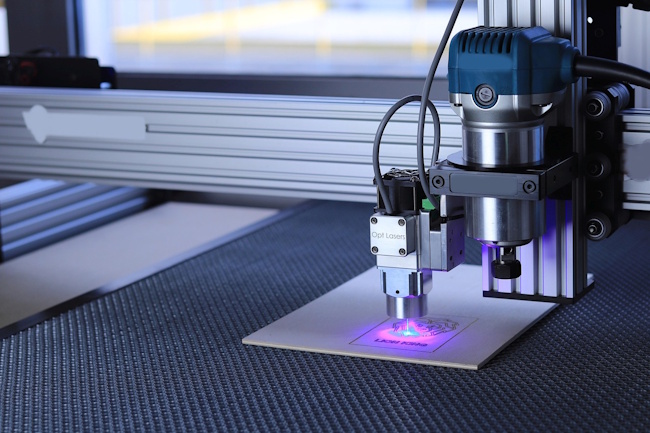
BIM-to-Field refers to the use of BIM models on the field, and beyond the desktop or laptop in an office setting. It leverages the use of mobile, tablets, Virtual Reality (VR) and Augmented Reality (AR) headsets, robots, drones, CNC manufacturing, 3D printing for construction and similar technologies on construction sites for the purposes of design-construction coordination, commissioning, field management, construction management, among others.

2. 4D/5D BIM Modeling (Time & Cost Integration)
4D in BIM refers to the integration of construction schedule (time and scheduling) with a 3D model. It leverages the use of 3D models aspect to simulate the construction sequence, plan site logistics and temporary works, identify scheduling conflicts, identify constructability issues, improve coordination and communication construction plans more clearly.

5D in BIM refers to the integration of cost information (quantities takeoff, estimates, budgets) with a 3D model. It leverages the use of 3D models to automatically generate and update quantities, produce more accurate cost estimates, assess cost impacts of design changes in real time, track budgets alongside schedule progress and support value engineering and cost control.
4D/5D modeling reduces delays and rework, improves planning accuracy, enhances collaboration, produces more accurate cost estimates, tracks project estimates along schedules, and address change management more effectively.
3. BIM Model-Based Prefabrication & Modularization
BIM model-based prefabrication and modularization are used for design, manufacture and assemble building components with high precision. BIM enables accurate detailing, clash-free coordination, and early integration of fabrication constraints, allowing components or modules to be produced efficiently in controlled environments and then installed on site. This approach reduces construction time, material waste, and rework while improving quality, safety, and overall project predictability.
4. OpenBIM & Data Interoperability
OpenBIM and data interoperability focus on the use of open standards and workflows to enable seamless information exchange between different BIM tools and project stakeholders. By relying on non-proprietary formats such as IFC, OpenBIM supports collaboration across disciplines, reduces data silos, and preserves information throughout the project lifecycle. This approach enhances transparency, long-term data accessibility, and flexibility in software choice while improving coordination and decision-making.
5. BIM for Facilities Management & Digital Twins
What is a digital twin? “A digital twin is a digital model of an intended or actual real-world physical product, system, or process (a physical twin) that serves as a digital counterpart of it for purposes such as simulation, integration, testing, monitoring, and maintenance.” (“Digital twin”)
BIM for facilities management and digital twins extends the use of building information models beyond construction into the operation and maintenance phase of assets. BIM provides structured, reliable asset data that supports maintenance planning, space management, and lifecycle decision-making.
A digital twin is an advanced, data-rich virtual representation of a building or infrastructure that extends the BIM model beyond design and construction into the operation and maintenance phase. It is a twin that is continuously updated with real-time data from sensors, Internet of Things (IoT) devices, and facility management systems, reflecting the actual condition, performance, and usage of the asset. It enables more efficient operations, predictive maintenance, and improved performance monitoring throughout the asset’s lifecycle.
6. Custom Automation & Computational Design
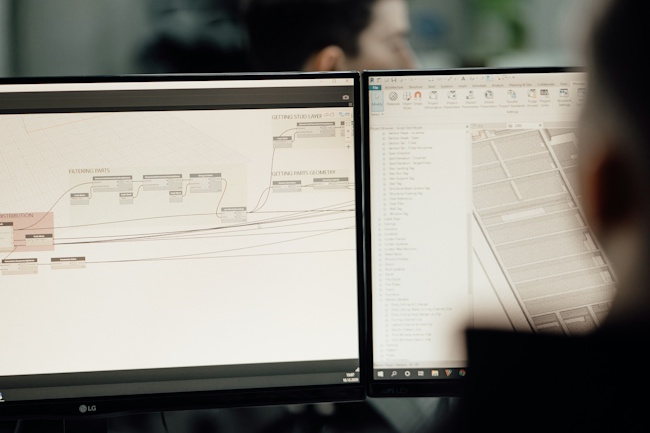
Custom automation and computational design in BIM use algorithms, scripts, and parametric modeling to automate repetitive tasks and optimize design solutions. By linking design rules, data, and model logic in BIM models, these methods enable faster iterations, reduce errors, and explore complex geometries or performance-driven designs that would be difficult to do manually by staff. This approach enhances efficiency, creativity, and precision in both design and construction processes.
7. BIM Execution Strategy & Governance at Scale
BIM execution strategy and governance at scale involve establishing structured frameworks, standards, and processes to manage BIM implementation across large projects or organizations. This includes defining roles, responsibilities, workflows, data standards, and quality control measures to ensure consistency, collaboration, and accountability on construction projects.

Effective governance ensures that BIM delivers value at every stage of the project lifecycle while enabling scalability, risk management, and alignment with organizational or industry-wide objectives. Although this can be very useful, based on my experience, it’s a double edged sword that can potentially create more confusion, inefficiencies and additional work.
The following is a list of some standards and frameworks that address BIM governance:
- ISO 19650 – The international standard for managing information over the whole life cycle of a built asset using BIM.
- BIMSmart – A framework that focuses on smart, efficient, and interoperable BIM implementation across projects.
- PAS 1192 series – Precursor to ISO 19650, offering guidance on information management, collaborative working, and Level 2 BIM adoption (mainly used in the UK).
- COBie (Construction Operations Building Information Exchange) – A standard for delivering structured facility data from design and construction to operations.
8. Information Management & ISO 19650 Compliance
Information management and ISO 19650 compliance focus on systematically organizing, sharing, and controlling project information throughout the asset lifecycle using BIM.

ISO 19650 provides a standardized framework for collaborative information management, defining roles, responsibilities, naming conventions, and processes to ensure accuracy, accessibility, and security of data.
The following is the list of ISO 19650 standards:
- ISO 19650-1: Concepts and principles
- ISO 19650-2: Delivery phase of assets
- ISO 19650-3: Operational phase of assets
- ISO 19650-4: Information exchange
- ISO 19650-5: Security-minded approach
To consult ISO 19650, follow this link: https://www.iso.org/ and search for a specific standard (i.e.19650-5).
Compliance helps teams reduce errors, improve coordination, and maintain consistent, reliable information from design and construction through operation and maintenance.
9. Digital Transformation Strategy (Beyond BIM)
A digital transformation strategy beyond BIM involves leveraging advanced technologies, data analytics, and integrated workflows to optimize the entire construction and asset lifecycle. It goes beyond 3D modeling to include IoT, AI, cloud collaboration, digital twins, and smart construction processes, enabling real-time decision-making, predictive maintenance, and operational efficiency.
This strategic approach aligns people, processes, and technology to drive innovation, improve productivity, and deliver greater value across projects and assets.
10. Change Management & Cultural Integration
Change management and cultural integration in BIM adoption focus on guiding organizations and teams through the transition to digital workflows while fostering a collaborative, innovation-ready culture. This is at the core of what I completed as a BIM professional throughout my career.

It involves training, stakeholder engagement, clear communication, and leadership support to address change resistance, build digital skills, and embed new processes into daily practice. Successful integration ensures that technology adoption is matched by mindset, perception, behavioral and organizational shifts, maximizing the benefits of BIM consistently through time.
The bottom line
Architecture, engineering, construction, and operations (AECO) firms pursuing advanced BIM adoption are seeking improved efficiency, accuracy, and collaboration across projects lifecycles. They are beyond the introduction of basic BIM tools, processes and standards, and are seeking greater productivity and higher quality projects while supporting innovation and long-term digital transformation.
The AECO industry has definitely evolved over the past few decades, albeit slower than other fields such as manufacturing or aviation, which saw a surge in the integration of automation and robotics.
Final thoughts
I have mixed feelings about BIM adoption. It makes a difference which industry (architecture, engineering, construction or operations) and which market (having worked in Quebec, British Columbia and several regions in the USA) we are considering for discussion. On one hand, I believe that the progress that has been made in BIM adoption is great and completely changed the way construction projects are delivered; on the other hand, I believe that the potential for growth has not been fully exploited, and much more could have been done over the past two decades to advance industries.
There are many reasons for this shortfall, with the primary reasons being a highly decentralized and unstandardized industry, collaboration almost strictly by incentive, mounting adoption costs, lower perceived ROI, resistance to change, legal and contractual issues, and lower project requirements.
Overall, I believe BIM adoption has been above average so far, with BIM more aggressively adopted in the USA as compared to Canada, with Quebec in the lead for the Canadian province with the highest adoption in my opinion.
Thank you for taking the time to read my blog article and I’ll see you again soon.

Tarek Ghazzaoui, Eng.
Senior BIM Manager

- Share this article:
Resources
Works cited
“Digital twin.” Wikipedia: The Free Encyclopedia, Wikimedia Foundation, https://en.wikipedia.org/wiki/Digital_twin. Accessed 31 January, 2026.
- 4DBIM, 5DBIM, AECO, BIMAdoption, BIMCollaboration, BIMExecution, BIMStandards, BIMWorkflow, BuildingInformationModeling, ChangeManagement, ConstructionInnovation, ConstructionManagement, ConstructionTechnology, DigitalConstruction, DigitalTransformation, DigitalTwin, ISO19650, ModularConstruction, OpenBIM, Prefabrication
- Read more articles

The Nastiest Trends in BIM Hiring
Tarek Ghazzaoui discusses the 5 nastiest trends in BIM hiring for architecture, engineering and construction in North America.

5 Myths About BIM
Tarek Ghazzaoui discusses the 5 myths about BIM and why debunking them is critical for AECO firms to stay competitive in the industry.

The 10 Types of Office People in BIM
Tarek Ghazzaoui discusses the 10 types of office people that professionals working in BIM in the AEC field deal with, based on his personal experience.
- Share this article

Unbiased journey into the rich expertise and experience of professionals working in architecture, engineering, construction & operations.